
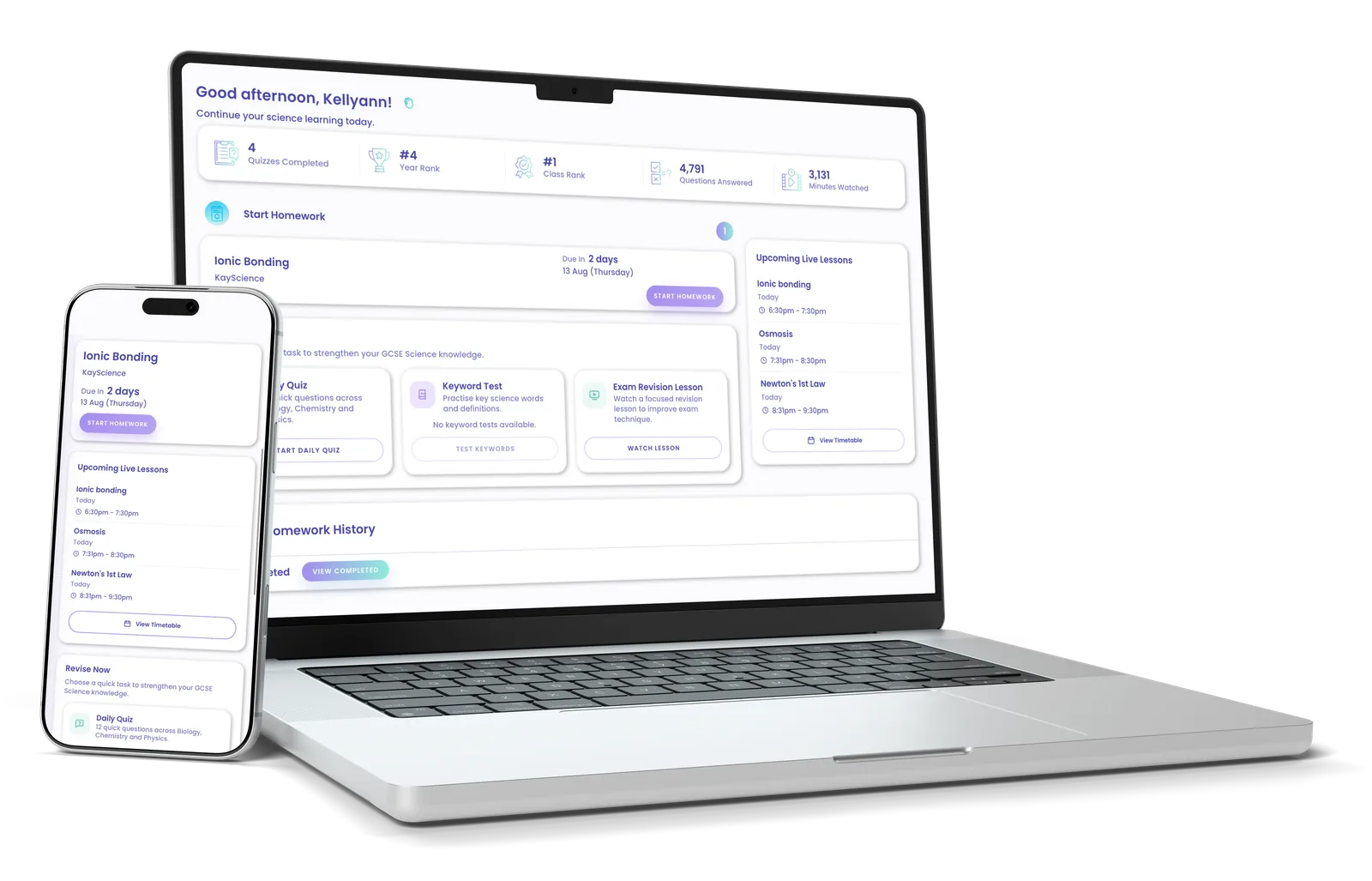
GCSE Science Revision Platform – What to Look For (KayScience.com Guide)
A GCSE science revision platform is an online system that combines structured teaching, exam-style questions, and performance tracking to help students improve GCSE Biology, Chemistry and Physics exam results. For parents comparing revision tools, the key difference is whether the platform simply provides content or actively teaches exam technique aligned with the mark scheme used by AQA, Edexcel and OCR.
With GCSE mock exams and Year 11 preparation approaching, many families are evaluating whether a digital platform can replace traditional tuition. The best platforms combine teacher-designed lessons, exam questions and clear progress data so parents can see measurable improvement.
This guide explains what to look for before choosing a GCSE science revision platform.
Definition
Definition: A GCSE science revision platform is a structured online learning system that teaches GCSE science content and exam technique through guided lessons, exam questions and performance tracking aligned with AQA, Edexcel and OCR specifications.
Unlike static revision websites, effective platforms replicate the way experienced teachers prepare students for exams.
What to Look For in GCSE Science Tuition
Not all online revision tools deliver the same academic outcomes. Some simply host videos or flashcards, while others provide structured tuition designed around the GCSE mark scheme.
When comparing platforms, parents should focus on five factors.
Key criteria for a GCSE science revision platform:
-
Specification alignment
Lessons should match the GCSE Biology, GCSE Chemistry and GCSE Physics specifications used by AQA, Edexcel and OCR. -
Exam technique training
Students must practise answering questions using the language examiners expect. High-quality platforms teach how to structure answers for maximum marks. -
Exam-style questions and mark schemes
Revision should include hundreds of questions written in the style used in real GCSE papers. -
Coverage of required practicals
Required practicals appear regularly in exams and are often poorly understood. Platforms should teach the method, variables and exam questions linked to each practical. -
Performance tracking and data
Parents should be able to see completion rates, quiz accuracy and topic strengths or weaknesses.
A structured system that meets these criteria can act as a form of online GCSE science tuition rather than simple revision.
Students using structured revision systems typically answer thousands of exam-style questions during Year 10 and Year 11, which significantly improves exam familiarity.
For students starting revision, a useful starting point is the [GCSE Science Revision Hub], which provides topic-based learning aligned to exam specifications.
Academic Credibility – How GCSE Science Exams Are Marked
A major difference between casual revision tools and structured platforms is whether they teach how marks are actually awarded.
In GCSE science exams, marks are given for specific scientific statements that appear in the mark scheme.
Consider the following GCSE Biology exam question.
Example GCSE exam question
Explain why increasing the surface area of the small intestine helps absorption of digested food molecules.
Typical mark scheme (3 marks)
• Villi increase surface area
• Larger surface area increases rate of diffusion
• More molecules absorbed into the bloodstream
A common mistake students make is writing long explanations without including the key terms that appear in the mark scheme.
For example, many students write:
“Food is absorbed better because there is more space.”
While conceptually correct, this answer would often gain no marks because it does not use the required scientific language.
Effective GCSE science revision platforms train students to recognise how mark schemes reward precise terminology.
This type of exam technique training is critical across GCSE Biology, Chemistry and Physics papers.
Parents can also access practice material through [GCSE Science Exam Questions], which exposes students to real exam-style tasks.
Private Tutor vs Structured Online Tuition
Many parents initially consider hiring a private GCSE science tutor.
Private tutors can be effective, but the approach has limitations.
A typical tutor session lasts one hour per week. In contrast, structured revision platforms allow students to practise daily and complete large volumes of exam questions.
The differences are often practical rather than academic.
Private tutor
-
Personalised explanation
-
Limited weekly contact time
-
Typically £30–£60 per hour
Structured online tuition
-
Teacher-designed lessons available anytime
-
Thousands of exam questions for practice
-
Performance tracking for parents
Many families combine both approaches. However, structured revision platforms often provide more consistent exam practice.
This is particularly important during Year 11 when revision must accelerate before mock exams.
Pricing and Value of GCSE Science Tuition
Cost is often a deciding factor when choosing revision support.
Traditional tuition is usually priced per hour, while revision platforms operate as monthly subscriptions.
Typical pricing ranges include:
-
Private tutor: £30–£60 per hour
-
Small group tuition: £15–£30 per session
-
Online revision platforms: £8–£15 per month
Because structured platforms allow unlimited practice, the cost per learning hour is usually significantly lower than private tutoring.
More importantly, parents should evaluate value based on measurable outcomes rather than price alone.
Effective GCSE science revision systems allow students to complete hundreds of exam questions and track improvement across topics.
Parents seeking structured teaching alongside revision resources may explore [GCSE Science Tuition] for a combined approach.
Why Structured Online GCSE Science Tuition Makes the Difference
GCSE science exams test both subject knowledge and exam technique.
Students who rely only on textbook revision often struggle because they have not practised answering exam-style questions.
Structured online tuition addresses this by combining three elements.
1. Teacher-led explanations
Lessons are designed by experienced science teachers who understand common misconceptions in GCSE Biology, Chemistry and Physics.
2. Exam-style question practice
Students repeatedly apply knowledge to questions similar to those in real exam papers.
3. Data-driven progress tracking
Parents can see topic completion, accuracy rates and readiness for mock exams.
This structured approach helps students build familiarity with the mark scheme and improve exam performance over time.
For many students, the difference is confidence during exams. When they recognise question patterns and understand how marks are awarded, performance becomes far more consistent.
Frequently Asked Questions
What is the best GCSE science revision platform?
The best GCSE science revision platform combines teacher-designed lessons, exam-style questions and performance tracking aligned with AQA, Edexcel and OCR specifications.
Are online revision platforms better than private tutors?
They serve different purposes. Tutors provide personalised explanations, while revision platforms allow students to practise large volumes of exam questions and track progress.
When should students start GCSE science revision?
Most students begin structured revision in Year 10, increasing intensity in Year 11 before mock exams and final GCSE exams.
Strong GCSE results rarely come from passive revision alone. Students who combine structured teaching with consistent exam question practice tend to achieve the most reliable outcomes.
Parents comparing revision tools should focus on whether the platform actively teaches exam technique rather than simply providing content.
Start revising today
800+ video lessons, quizzes and exam questions for GCSE Science.
Start Your Free Trial