
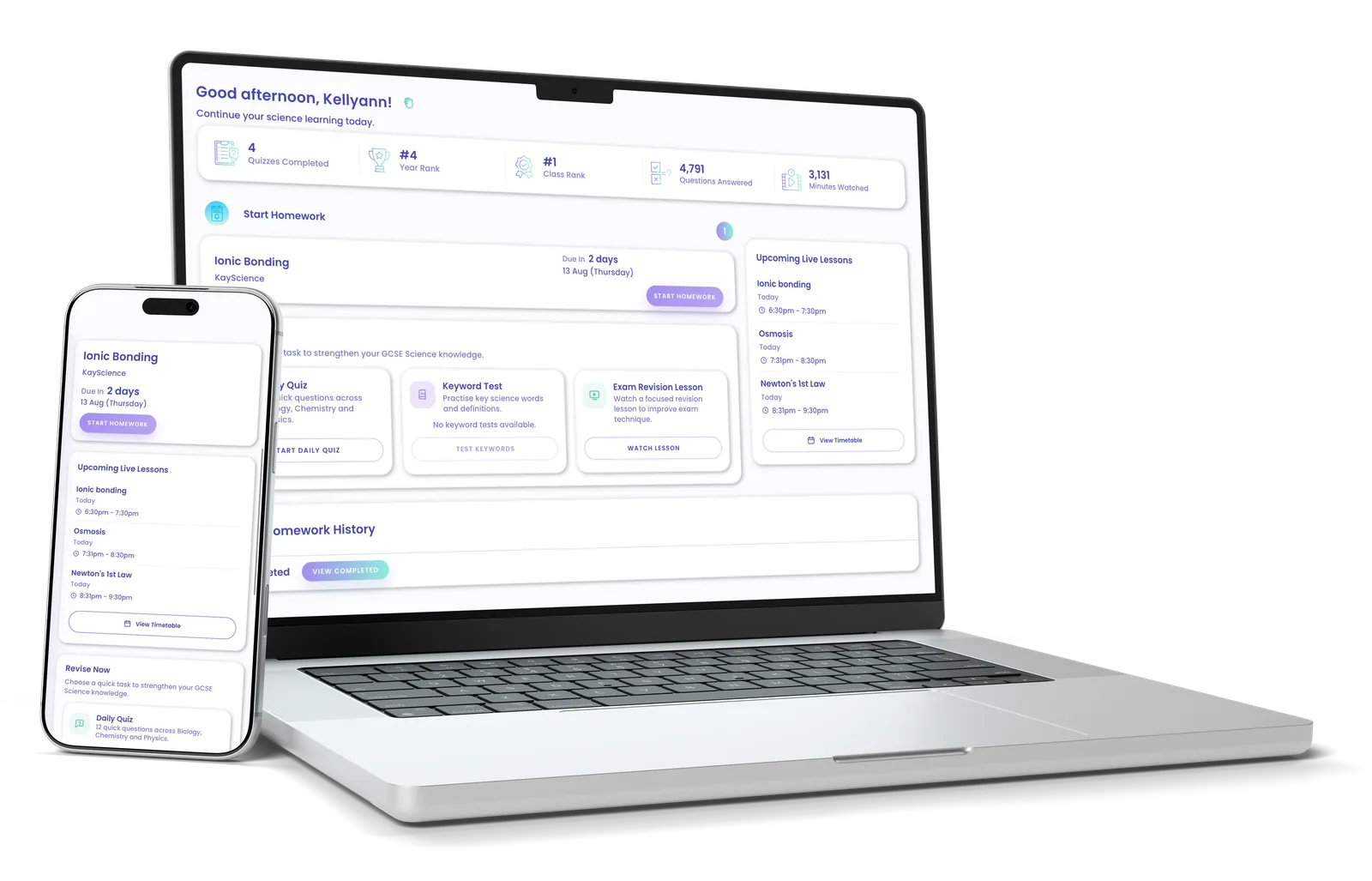
Evening GCSE science tuition provides structured, after-school support that combines content teaching, exam technique and guided exam practice aligned with AQA, Edexcel and OCR. For many families, it is the most practical way to improve grades without disrupting school or weekend commitments.
For parents evaluating options, evening GCSE science tuition offers a balance of consistency, accountability and flexibility, particularly during Year 10 and Year 11 when mock exams and final exams are approaching.
Definition: GCSE science tuition is structured academic support that teaches subject knowledge and exam technique aligned with AQA, Edexcel and OCR specifications, with a focus on improving performance in exams.
Evening sessions are especially effective because they reinforce what students have learned in school on the same day, while addressing gaps before they become embedded. This is particularly important in subjects like GCSE Biology, Chemistry and Physics, where knowledge builds cumulatively.
In the first half of any structured approach, students should be directed to core content, such as the [GCSE Science Revision Hub], to ensure topic coverage is complete before focusing on exam technique.
What to Look For in GCSE Science Tuition
Not all evening tuition is equal. Parents should focus on structure and outcomes, not just availability.
Key decision criteria:
- Clear curriculum alignment with AQA, Edexcel and OCR
- Built-in exam technique teaching, not just content delivery
- Regular exam question practice with mark scheme feedback
- Consistent scheduling (same time each week)
- Progress tracking across topics and mock exams
A common mistake is choosing tuition that only reteaches content. In GCSE science, students often lose marks due to how they answer, not what they know.
Effective evening tuition must include:
- application of knowledge
- use of correct scientific terminology
- structured exam responses
Without this, progress is limited.
Academic Credibility – How GCSE Science Exams Are Marked
GCSE science exams are not marked purely on correct ideas. They are marked using structured mark schemes that reward specific terminology and logical explanations.
Example GCSE Question (Biology):
Explain how the structure of the alveoli makes them efficient for gas exchange. (4 marks)
Mark Scheme Insight:
- Large surface area (1)
- Thin walls (1)
- Good blood supply (1)
- Maintains concentration gradient (1)
Examiner insight: Students often write general descriptions but fail to link structure to function clearly. Marks are awarded for specific points, not vague explanations.
Common student mistake:
Writing “alveoli are good for gas exchange because they are small” — this does not match mark scheme language and gains no credit.
Evening GCSE science tuition should include regular exposure to exam questions, such as those found in the [GCSE Science Exam Questions], to ensure students understand how marks are awarded.
Private Tutor vs Structured Online Tuition
Parents often compare private tutors with structured platforms.
Private Tutor
- Flexible but variable quality
- Limited access to resources
- Often focused on homework help
- Expensive hourly cost
Structured Online Tuition (e.g. KayScience)
- Consistent curriculum coverage
- Integrated revision resources
- Built-in exam technique training
- Regular exam question practice
- Scalable and more cost-effective
The key difference is system vs individual delivery.
A private tutor may explain a topic well, but structured tuition ensures:
- no gaps in required practicals
- full specification coverage
- repeated exposure to exam-style questions
This is particularly important for higher tier students aiming for grades 7–9.
Pricing and Value of GCSE Science Tuition
In the UK, private tuition typically ranges from £25–£60 per hour.
Evening GCSE science tuition delivered through structured platforms often provides:
- multiple weekly sessions
- access to video lessons
- quizzes and exam questions
- progress tracking
This creates significantly better value.
Example comparison:
- Private tutor: £200/month (1 session per week)
- Structured platform: similar cost but includes full revision system + multiple sessions
The value lies in consistency and repetition, which are essential for GCSE science success.
Why Structured Online GCSE Science Tuition Makes the Difference
The biggest advantage of evening GCSE science tuition is consistency.
Students benefit from:
- revisiting topics after school
- immediate clarification of misunderstandings
- regular exam technique reinforcement
- exposure to mark schemes
A structured system ensures that students move from:
content understanding → exam application → mark optimisation
This is where most grade improvement occurs.
For example, students who consistently attend structured sessions and complete exam practice can improve by 1–2 grades within a term, particularly when gaps are identified early through mock exams.
With Year 11 mock exams approaching, delaying structured support often leads to:
- persistent knowledge gaps
- weak exam technique
- avoidable mark loss
Evening tuition provides a controlled environment where students are guided through the exact skills needed to improve.
Parents looking for a complete solution should consider platforms that combine:
- live teaching
- revision resources
- exam question practice
This integrated approach is what differentiates structured tuition from ad hoc support.
To explore a full system that includes all of these elements, see [GCSE Science Tuition].
FAQ
Is evening GCSE science tuition effective?
Yes. Evening sessions reinforce school learning, improve exam technique and provide consistent practice, which directly improves exam performance.
How many evening sessions should a student attend?
Most students benefit from 2–4 sessions per week, depending on their target grade and current level.
Can evening tuition help with all exam boards?
Yes. Structured tuition aligned with AQA, Edexcel and OCR ensures full specification coverage.
Start revising today
800+ video lessons, quizzes and exam questions for GCSE Science.
Start Your Free Trial